

Healing Isn't Linear: What Recovering From a Herniated Disc Taught Me
Many of my clients are in my office after having tried many many other things to fix their pain. Their body has gone through so much and once I start working with them a very common concern comes up.
It can be difficult to see the full picture in the healing journey when you are in it day to day and I often here something along the lines of:
"I was feeling so much better... and then I woke up stiff and in pain again."
or
“I had a great day Monday, then Tuesday it was hurting really bad, then it was ok, and then it was hurting again.”
It can be discouraging, frustrating, and often scary.
It's easy to start asking yourself:
Am I doing something wrong?
Did I undo all my progress?
Am I getting worse?
What if this is as good as I'm ever going to get?
I understand that feeling because I've been there myself.
Last summer, I experienced a severe herniated disc that completely changed my perspective on healing.
For months, I spent most of my days in bed because standing, walking, and even simple daily activities were incredibly painful. As someone whose life revolves around movement, whether it's hiking, mountain biking, climbing, or helping other people move better, it was one of the hardest experiences I've ever been through.
At first, my goal wasn't to get back on my mountain bike or return to hiking.
My goal was simply to make it through the day with as little pain as possible.
Most of my energy went into trying to find the least painful position to lie in.
I wasn't thinking about mountain biking again.
I wasn't thinking about hiking.
I just wanted to be able to walk without pain.
I remember thinking,
"If I could just walk my dog around the neighborhood again, I'd be happy… Is that really too much to ask? All I want is to be able to walk."
As the weeks went by, I slowly began to improve. But my recovery didn't happen in a straight line.
Some days I would wake up feeling like I had finally turned a small corner.
The next day, I would feel like I had lost weeks of progress.
There were times I questioned whether I had done too much.
Everyday I was thinking:
Did I move too much?
Was I not moving enough?
Did that stretch make things worse?
Am I setting myself back by trying to walk while I'm still bent over?
On worse days I would wonder if I had re-injured my back or if I was ever going to fully recover.
Would this be my new life?
Looking back now, I realize those ups and downs weren't signs that I was doing the wrong thing.
They were simply part of healing.
I had expected every day to feel better than the one before.
But healing doesn't work that way.
It looks much more like a winding trail than a straight line.
By the first week of November, I was finally able to stand almost completely upright. I decided to accompany my dad on a short work trip to Tahoe. I almost didn’t go because I was worried the car ride would be too much or I would do something that would set be back, but after spending months mostly at home, I needed a change of scenery.
I had no expectations.
I just wanted to get out of the house.
What I didn't expect was that, over the course of those few days, I would continue improving enough to start taking short walks.
One afternoon, I walked about a half mile to a Fallen Leaf Lake.
To most people, that probably doesn't sound like a big accomplishment.
To me, it felt incredible.
After months of barely being able to move, I was outside again. I was surrounded by mountains and trees instead of the four walls of my bedroom. I remember feeling so grateful just to be walking through nature again.
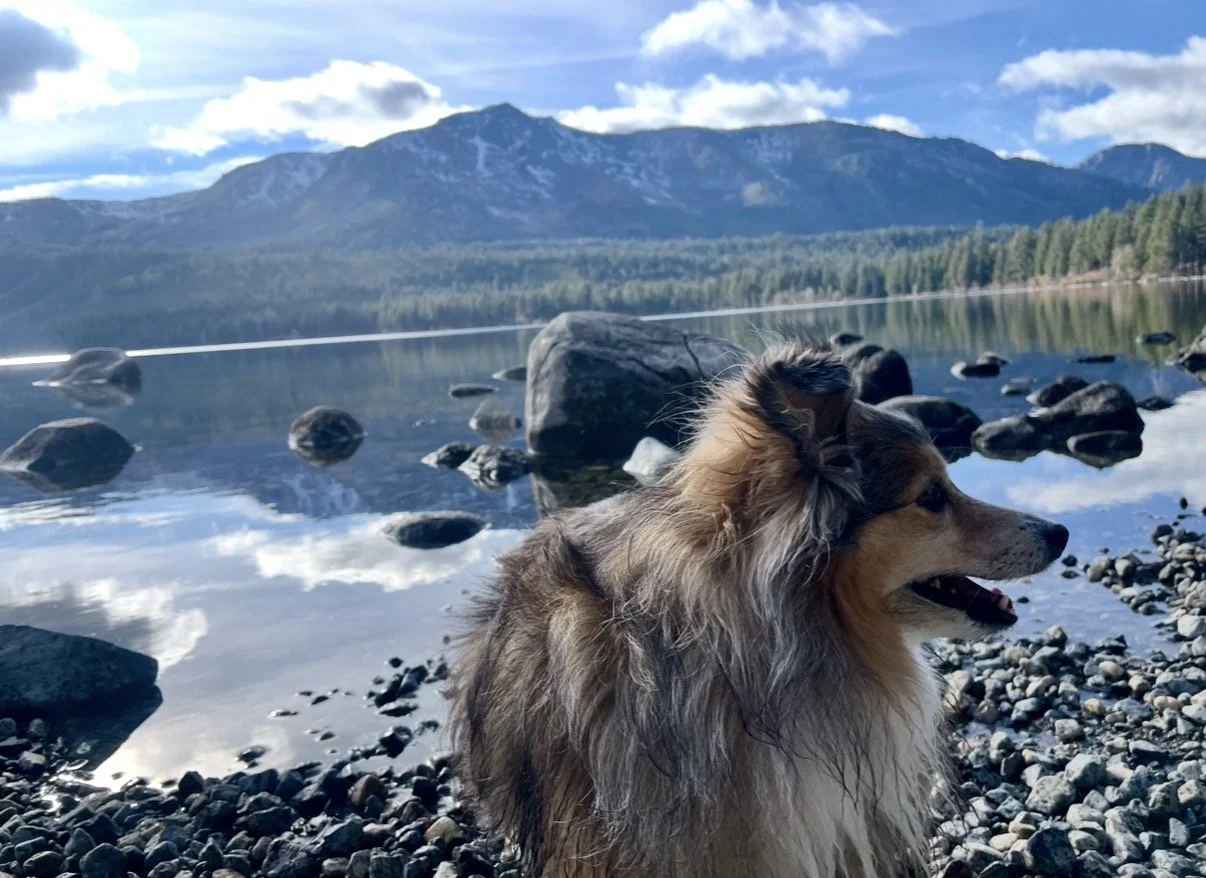
Fallen Leaf Lake - November 2025
That walk is something I'll never forget.
Before my injury, going for a walk was something I rarely thought about.
Now, it's something I never take for granted.
Healing Doesn't Mean Every Day Feels Better
Even after that trip, my recovery wasn't finished.
There were still days when my symptoms flared up.
Even now, I occasionally notice mild nerve symptoms in my lower leg.
Even now, when I occasionally feel that familiar nerve pain in my lower leg, my first reaction is still fear.
Is something wrong?
But then I remind myself of something I now tell many of my clients:
Healing isn't measured by your worst day.
It's measured by the overall direction you're moving.
When I zoom out, the picture is very different.
I can mountain bike again.
I can hike.
I can lift weights.
I can work with clients all day.
Most importantly, I can live my life again.
Those occasional symptoms don't define my recovery.
They're simply small bumps along a much larger upward path.
Why Healing Isn't Linear
One of the biggest misconceptions about recovery is that every day should feel a little better than the one before.
Our bodies don't work that way.
Healing is influenced by many different factors, including sleep, stress, activity levels, inflammation, nutrition, and your nervous system.
Some days you'll naturally feel better.
Other days you may feel more sore or more sensitive.
That doesn't necessarily mean you've caused new damage.
Sometimes it simply means your body is responding to everything you've asked of it.
Pain and healing don't always move together.
You can continue healing even if your symptoms fluctuate from day to day.
What I See in My Clinic
I see this happen with clients all the time.
Someone comes in discouraged because they had a painful week after several great weeks.
Their first thought is often,
"I'm back where I started."
But when we step back and look at the bigger picture, that's almost never true.
Maybe they're sleeping better.
Maybe they're walking farther.
Maybe they can finally pick up their child without fear.
Maybe they recovered from this flare-up in two days instead of two weeks.
Those are meaningful signs of progress.
Sometimes we're so focused on today's pain that we forget to notice everything we've gained over the last month.
One thing I strongly encourage clients to do is keep a simple journal.
Every day, or even just a few times each week, write down how you're feeling and what you were able to do.
Healing happens so gradually that it's surprisingly easy to forget where you started.
Looking back at those notes can be one of the best reminders that, even with setbacks, you're still moving forward.
Zoom Out
If you're recovering from an injury or dealing with persistent pain, I want to encourage you to ask yourself a different question.
Instead of asking,
"How do I feel today?"
Ask,
"Am I doing more than I could a month ago?"
That's a much better measure of progress.
Recovery isn't about never having another setback.
It's about each setback becoming a little smaller, a little shorter, and a little less frightening.
A Final Thought
My herniated disc taught me many things, but perhaps the most important lesson was this:
Healing is rarely a straight line.
Some days you'll feel amazing.
Some days you'll wonder if you're moving backward.
Keep looking at the bigger picture.
One difficult day doesn't erase weeks or months of progress.
I still have the occasional reminder in my lower leg that my body went through something significant.
But those moments no longer define my recovery.
Instead, they remind me to appreciate everything my body can do today.
And every time I find myself walking through the woods, riding my mountain bike, or climbing a trail that once felt impossible, I'm reminded that healing isn't about perfection.
Healing isn't about having perfect days.
It's about slowly getting your life back.
One walk.
One bike ride.
One hike.
One good day at a time.
And when the harder days come, remember this:
Progress isn't measured by where you are today. It's measured by how far you've come.
